

As the Carnavali (Mardi Gras) festivities wind down on Kathara Deftera, (Clean Monday), Greeks and their households are immersed in the Lenten period.
Attending church services and fasting are a constant for forty days leading into the much anticipated celebration of the resurrection of Jesus Christ.
Fasting is personal and customized in modern times. My childhood memories of lent are those of strict adherence to:
No meat at all during lent. A less severe version was no meat on Wednesdays and Fridays.
Today, we tailor fasting to fit our circumstances. And to make it acceptable and forgiven, the emphasis is placed on being clean on the inside-the spiritual part of oneself rather than the consumption of food. Focusing on how clean and kind our heart, mind, and actions are. We often hear, “fasting is not what you put in your mouth but what comes out of it.”
The arguments are made by some “what good does it do to abstain from eating meat for forty days if you are a gossiper, if you are hurting people if you are unkind?”
In the past, during Holy Week, certain preparations for the Resurrection Celebration took place on a particular day.
I am uncertain what Holy Monday’s designated ritual was. Perhaps cleaning and preparing the house for Pascha (Easter).
On Holy Tuesday, I recall the women talking about their Tsourekia (Easter breads) success or failure. “My yeast worked so fast.” “I had to make a second batch because my yeast didn’t rise.” “My tsourekia are the best I ever made.” One could count on the sweet aroma of tsourekia in most households.
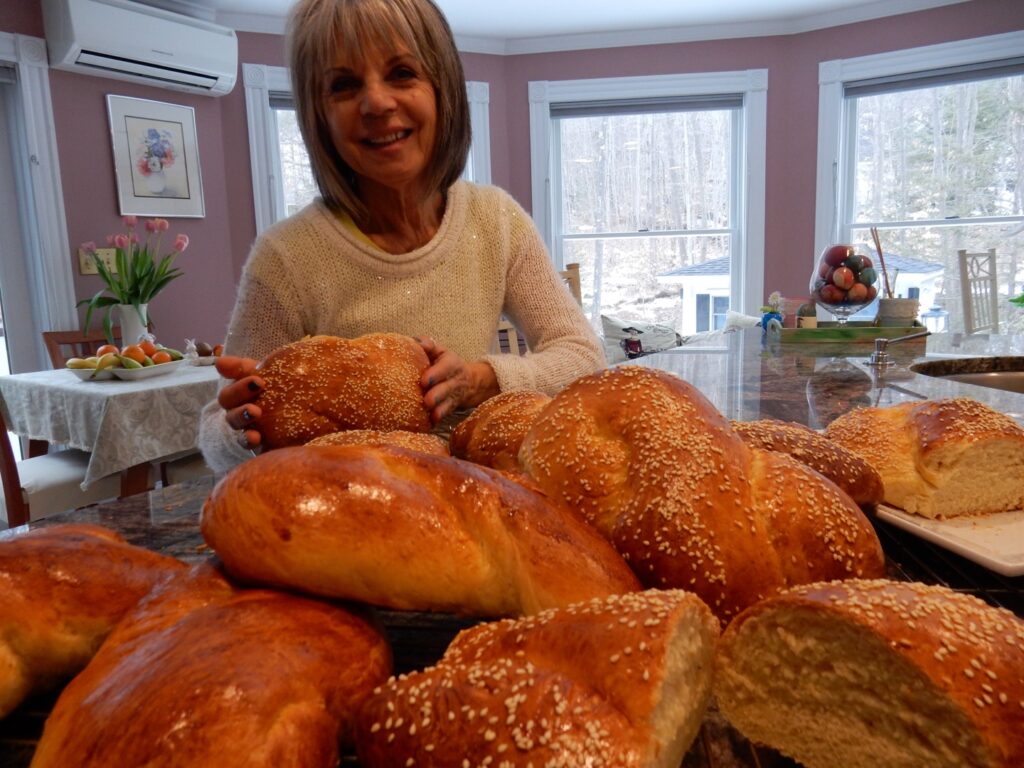
Wednesday was a day of baking the family’s favorite pastries!
And on Thursday the dying of eggs. Holy Thursday was another day of declarations of successes or failures. “I had such good luck with the dye this year.” “I’m never buying dye from that store again; the eggs came out pale pink instead of red. Thank God my neighbor had extra dyes that worked perfectly.”
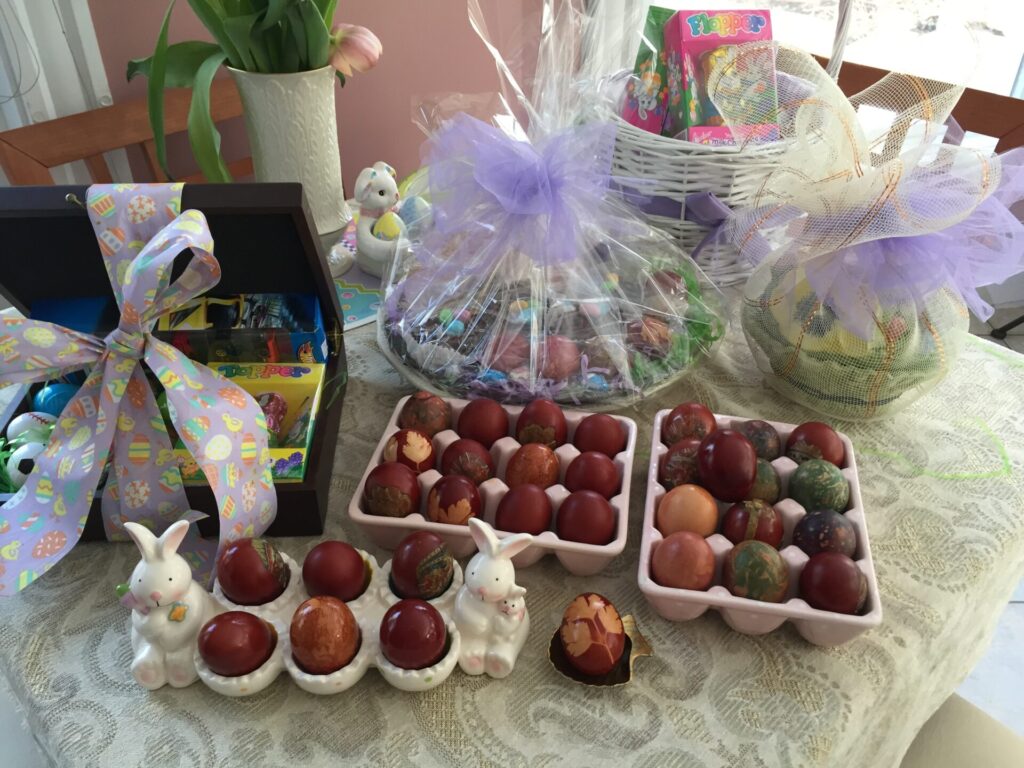
Good Friday was a day when we weren’t supposed to do anything but be mournful and reflective on Jesus’s crucifixion and entombment.
These traditions, like everything else now days, have evolved into fitting the lifestyle of today’s world. Fortunately, I can follow the Holy Week preparations on the designated days. If one can, it’s an excellent way to stay organized and on schedule.
Holy Saturday morning, we have the choice to receive communion and break fast.
And finally, for the much anticipated finale, Saturday evening. A beautiful church service with the symbolic light being received by everyone. All attendees hold a lit candle (lambada)and chant, “Christ has risen from the dead, by death trampling down upon death, and to those in the tombs He has granted life.”
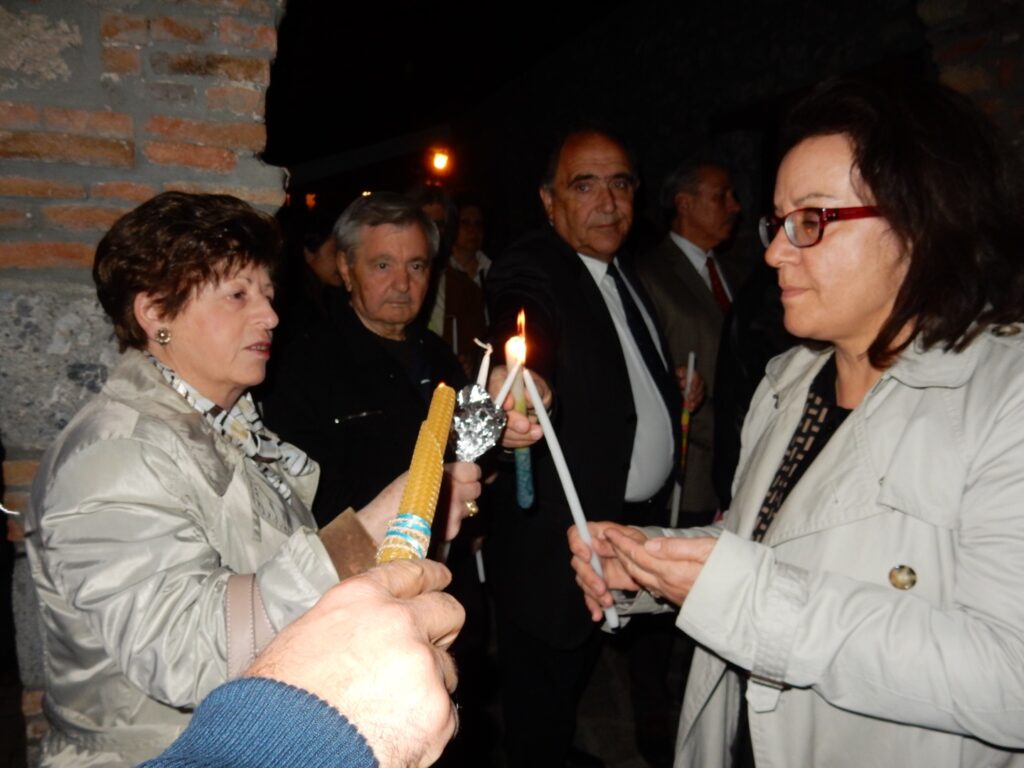
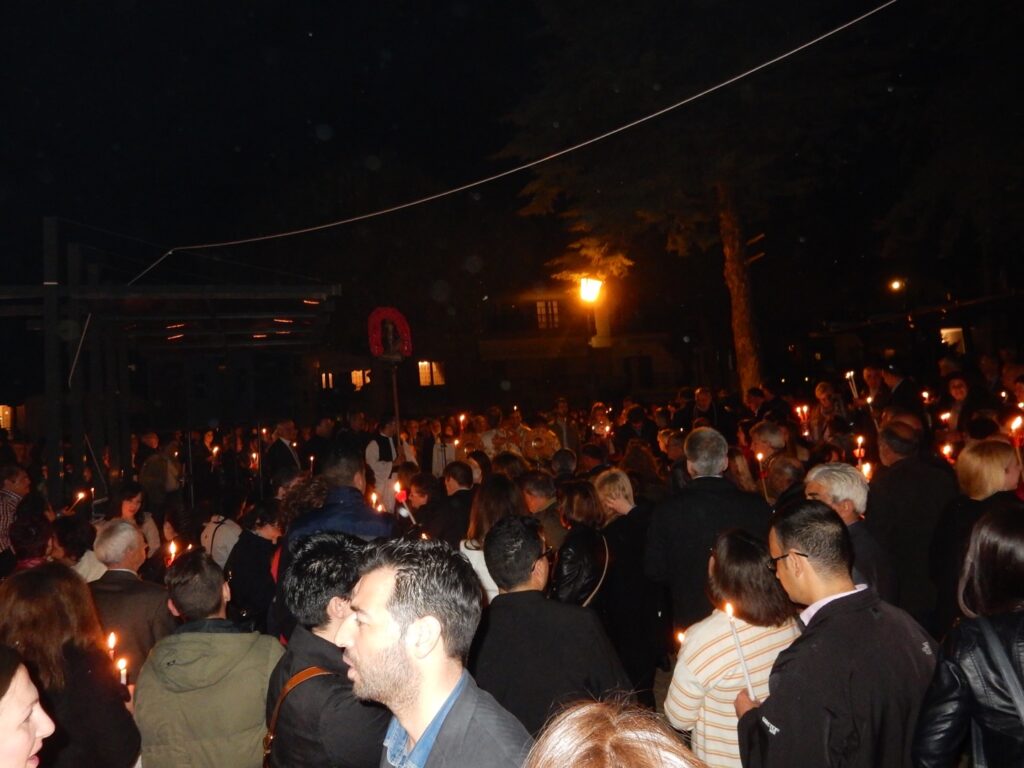
In Greece the priest brings the light outside.
For a description of Saturday’s church service, click on the link.
I will be happy to share the methods I have used to dye eggs-contact me.