

This is the end of our first taxi ride.
The giant plane trees and the fountain mini-park receded in the rearview mirror along with the memory they had awakened. I glanced to my right to glimpse Noula’s house. Decades of growth created a screen of glossy, green-leafed oak trees obscuring my view. A gray vehicle peeked through where the horse-drawn wagon used to be, nudging me to recall the times Noula and I used it for our hiding place. For a moment the emotions I felt at the village entrance gave way to wondering where and how my childhood friend was.
Before I could process those thoughts, we entered the center of the village, composed of the Katarahia’s Teverna, the church, and the town fountain. The spring water fountain was the primary source of drinking water during my youth. I am not sure when the Kostohorians got indoor plumbing. I do recall using a sink in my uncle’s kitchen when I visited in the early 70s. Memories of being sent to fetch water (chapter 11) surfaced along with the only telephone in the village in 1958 at the Katarahia Tavena. The Taverna was the link between Kostohori and the rest of Greece — that February night the phone rang, and Theo Pavlos was informed of his sister’s death, to go pick up her coffin along with her two little girls.
In early October 2023, the village feels deserted. Thalia Katarahia and her husband are one of five families living in the village year round. All other residents come to the village after schools close and return to their cities when schools start up. The Taverna’s official name is “Klimataria” (Arbor). Mrs. Ioulia Katarahia passed a few years ago. We had the pleasure of reaching her daughter, Thalia, who, along with her brother, is carrying on their parents’ legacy. There was no way the bubbly Thalia would accept a refusal of the Greek hospitality. We stayed for the midday meal.
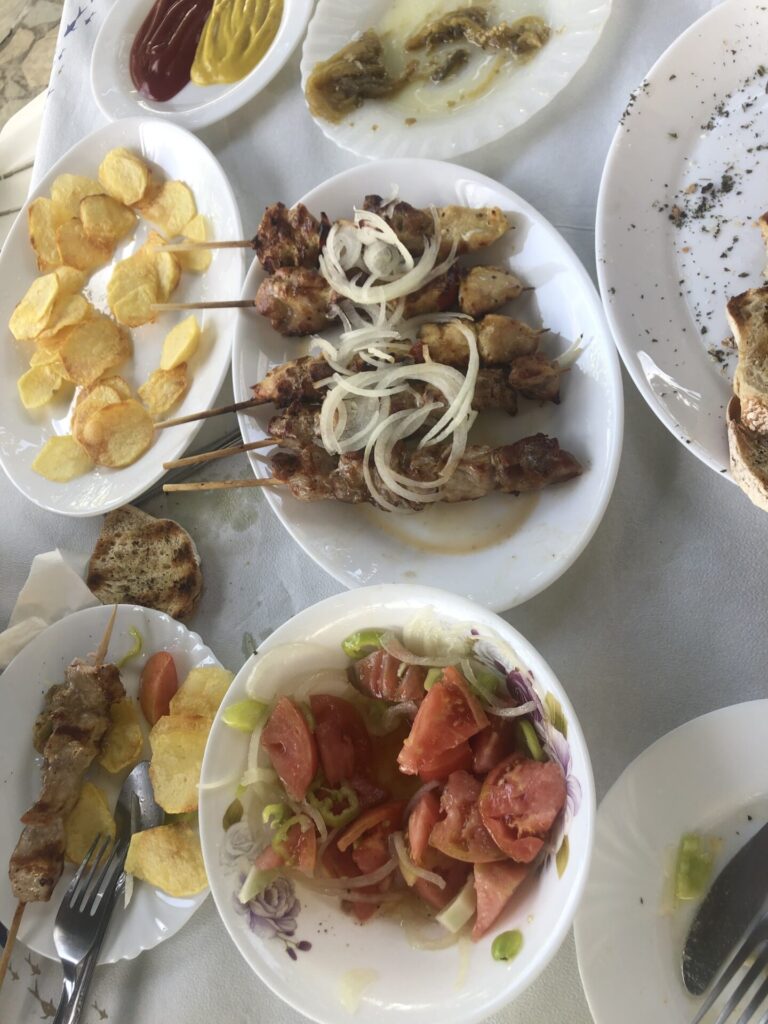
Before we knew it, the wood was turning into red-hot coals on the grill, ready for the pork skewers (soulaki). From our table, we heard the sizzling sound of their drippings as her brother worked his magic at the grill. Thalia placed a white bowl with cut tomatoes, cucumbers, red pepper slices, rings of red onion, kalamata olives, topped with a square piece of feta cheese on the table. The yellow cloth on our table was protected in the typical taverna style by placing a paper covering, usually decorated with an olive motif displaying the taverna’s name. I should mention that besides fresh ingredients — in our case from the garden next to the grill — nothing makes a horiatiki Greek salad better than the extra virgin oil processed from the establishment’s olive trees.
Thalia told us stories her mother had shared with her about our parents, and us.
She continued as we enjoyed our meal with updates and developments that had taken place in the village. Thalia was excited to inform us of the monument they erected following thorough research about the original inhabitants. The village association formed a committee for the project, which commemorates the original inhabitants of Kostohori. As much as I was savoring every bit of my souvlaki and homemade fried potatoes, I couldn’t wait to see the monument, which included my beloved yiayia’s name. Oh, I mustn’t forget the hard-crusted bread with a center soft enough to dip it in oil. As is customary, at the end of the meal the establishment offers a treat. With pride, Thalia placed three small square glass dishes with cherries of her own creation- glyko (preserves in syrup).
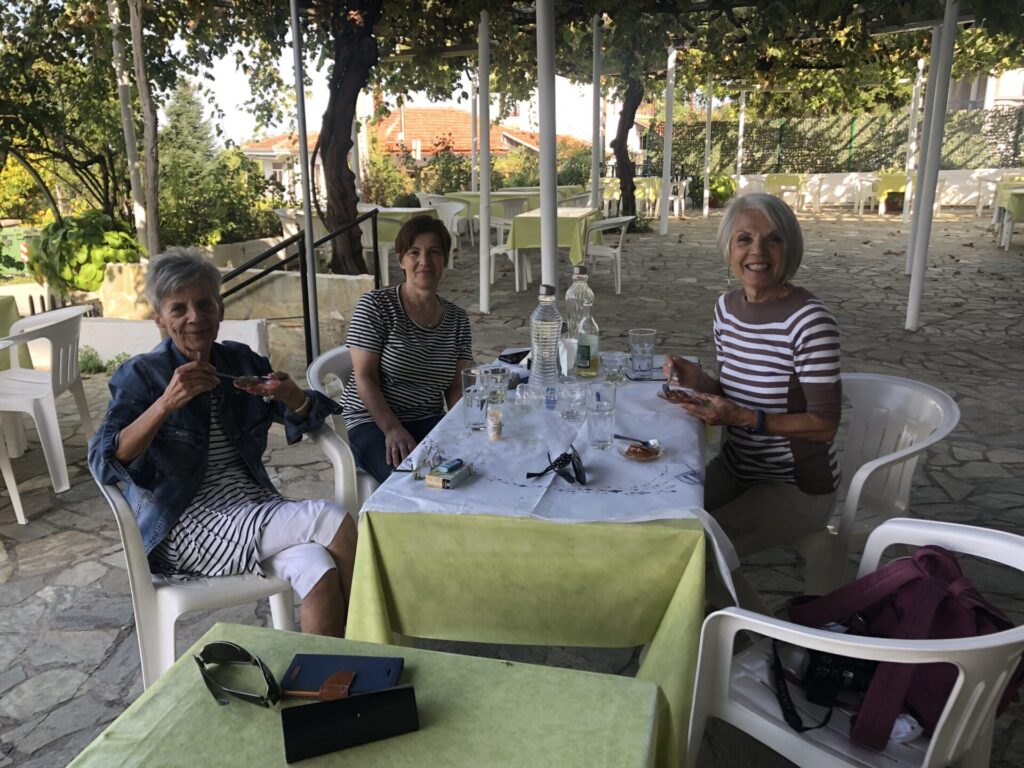
Lena and I enjoying our cherry glyko
Lena stayed for a visit with Thalia while Charles and I went exploring. After lighting candles at the church, we turned our attention to the black granite monument in the churchyard. I felt a warm feeling in my gut as I read the familiar names I knew from childhood. I ran my finger over the white carved name Karavasili Despina and in my mind I could hear my yiayia’s soft voice saying “lelevose” (Pontian for I adore you, equivalent to I love you).
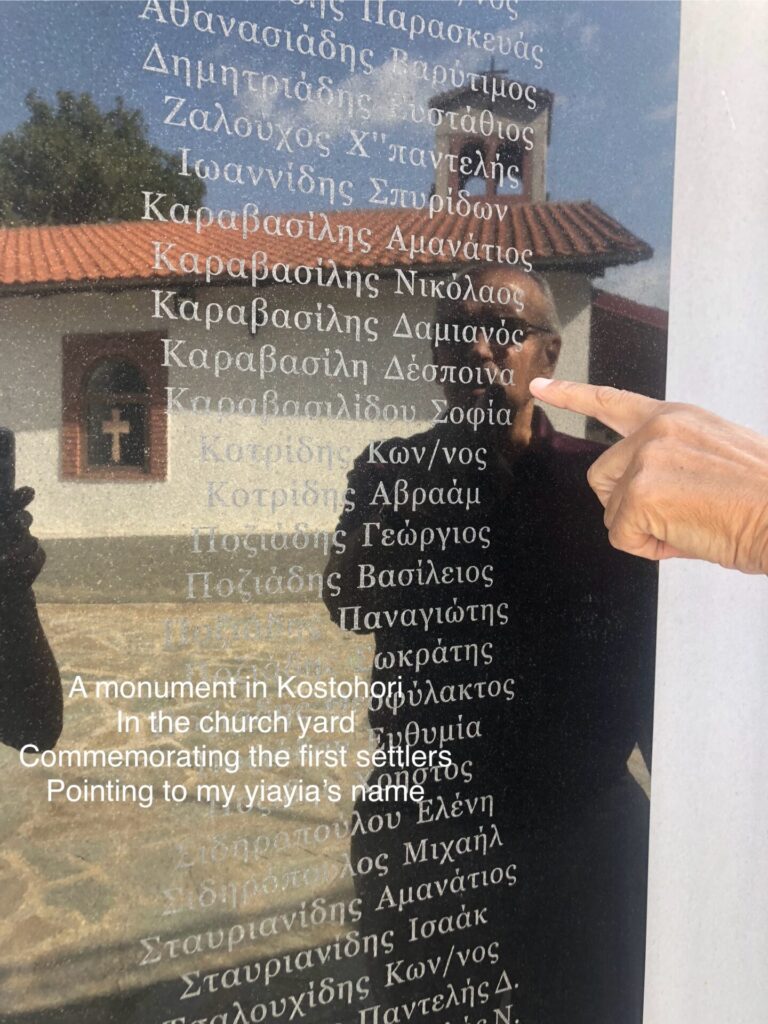
Pointing at my Yiayia’s name. Karavasili Despina
We headed up the hill to what used to be the one-room schoolhouse. The unpleasant memory of our teacher, Mr. Gerasimos, was instantaneous, but in-spite of it I also felt the ten-year-old Stella feeling secure at the school. At the time, I believed I would live in the village for the rest of my life. I suppose it must have been because the love I felt from my yiayia and Theo Pavlos was larger than the dislike I felt for my teacher’s loathsome behavior. Thalia informed us that since they no longer need a school in the village, the building is being repurposed as a community center.
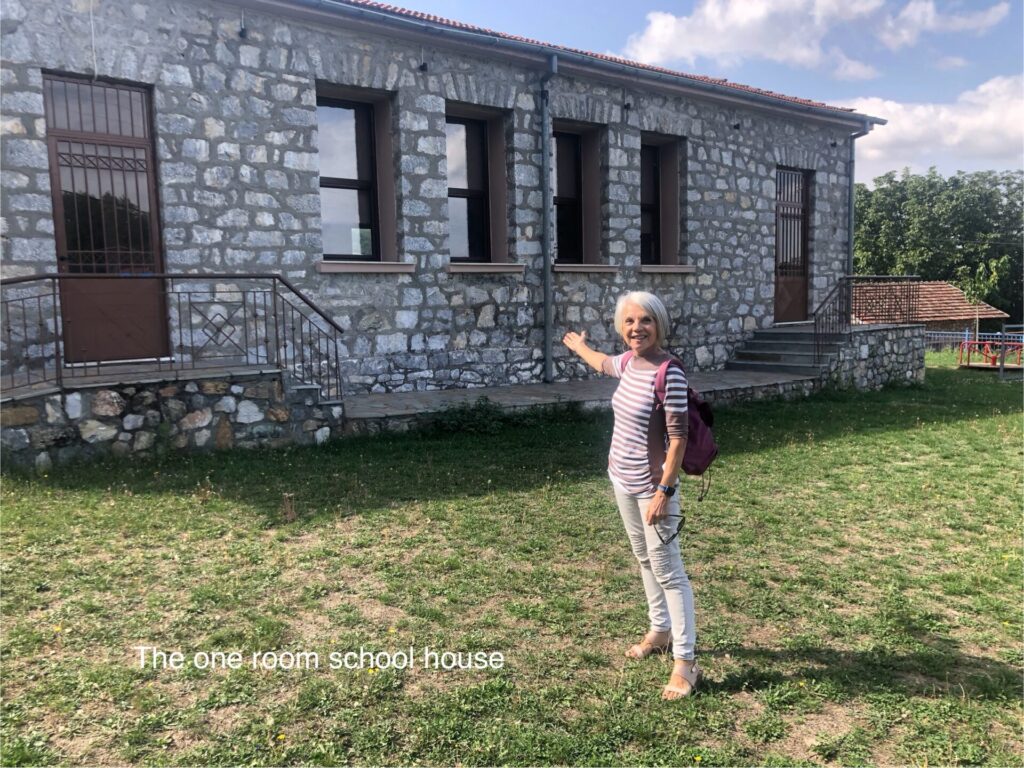
Charles and I continued our tour. After photographing yiayia’s old house, the campgrounds, the fountain, chestnut trees and anything that reminded me of my yiayia’s village, we returned to the taverna.
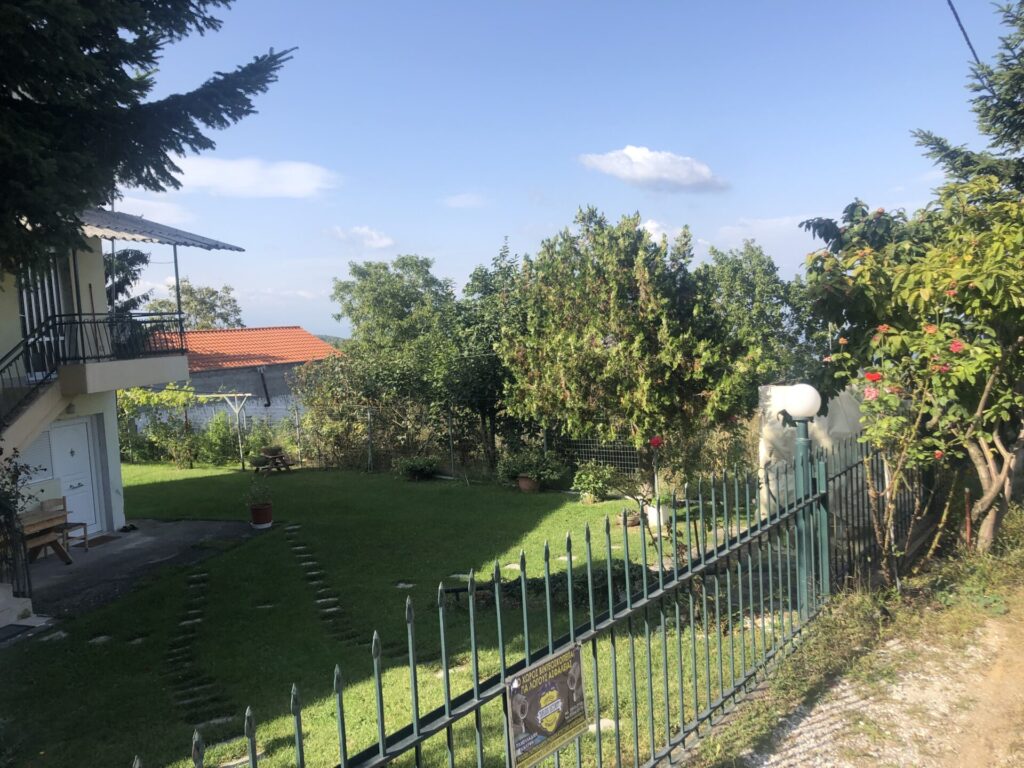
Yiayia’s house and backyard
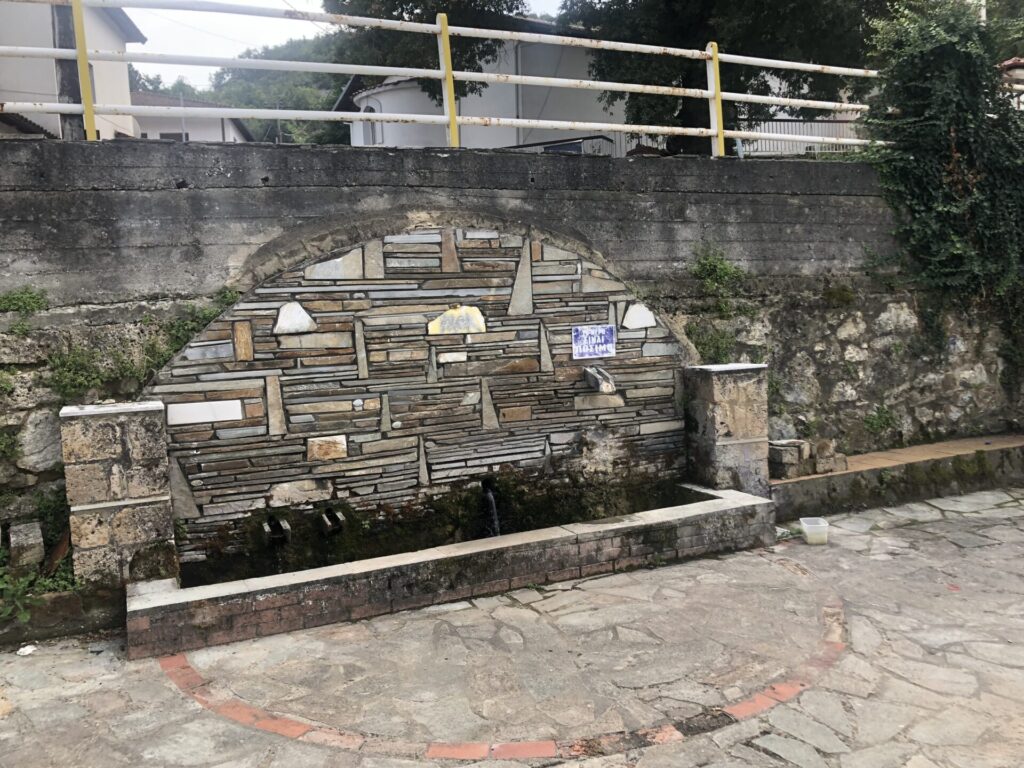
The Fountain
Kostohori was the last stop on our first taxi ride. By revisiting Kostohori as part of retracing our first taxi ride, I feel we honored that part of our past that changed our lives. Yes, the memory of our arrival on that grievous February morning is vivid and sad. However, Lena and I are grateful for the lives we have built after our young family crumbled. We are blessed.
My next blog post will be another visit to Kostohori with a very special person who was interested in visiting the places he read about in Taxi to America, my 18-year-old grandson.
And that is precious!
Have you ever revisited a place where you felt sad and joyful? I would love to hear your story. Send me a note. Click on Contact