
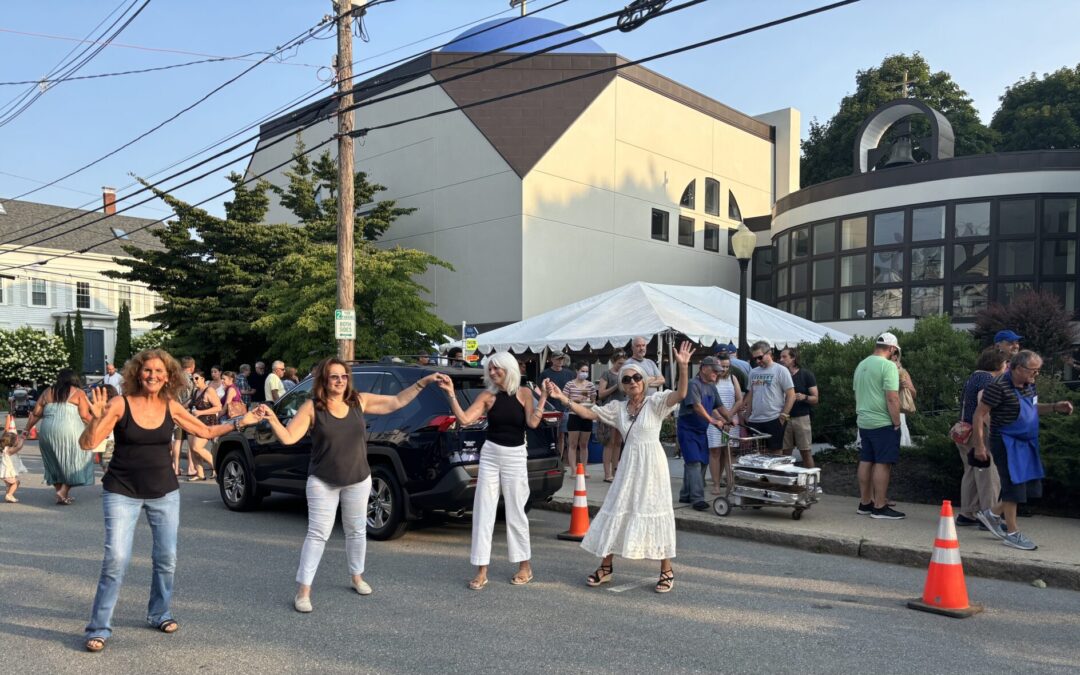
Finally, June has arrived. It is a reassuring sign that summer is upon us. It is a month of many celebrations and a popular month for weddings. For the Greek community in the United States, June is the beginning of festivals.
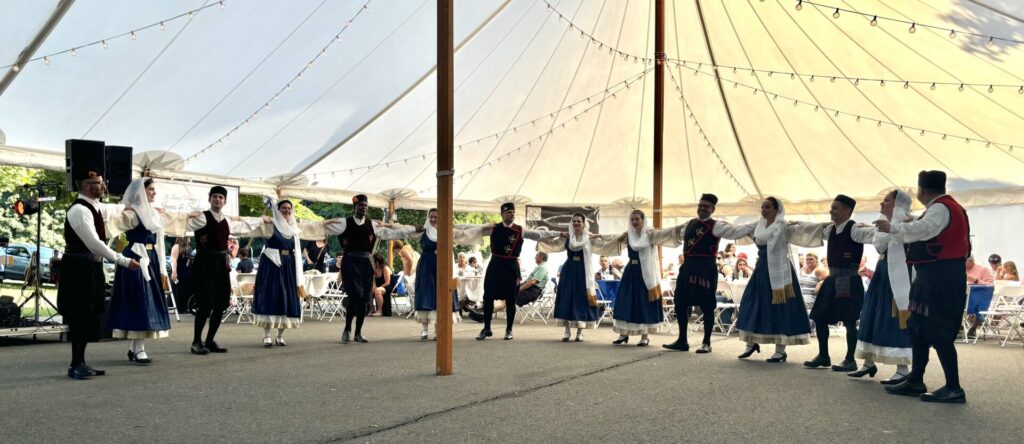
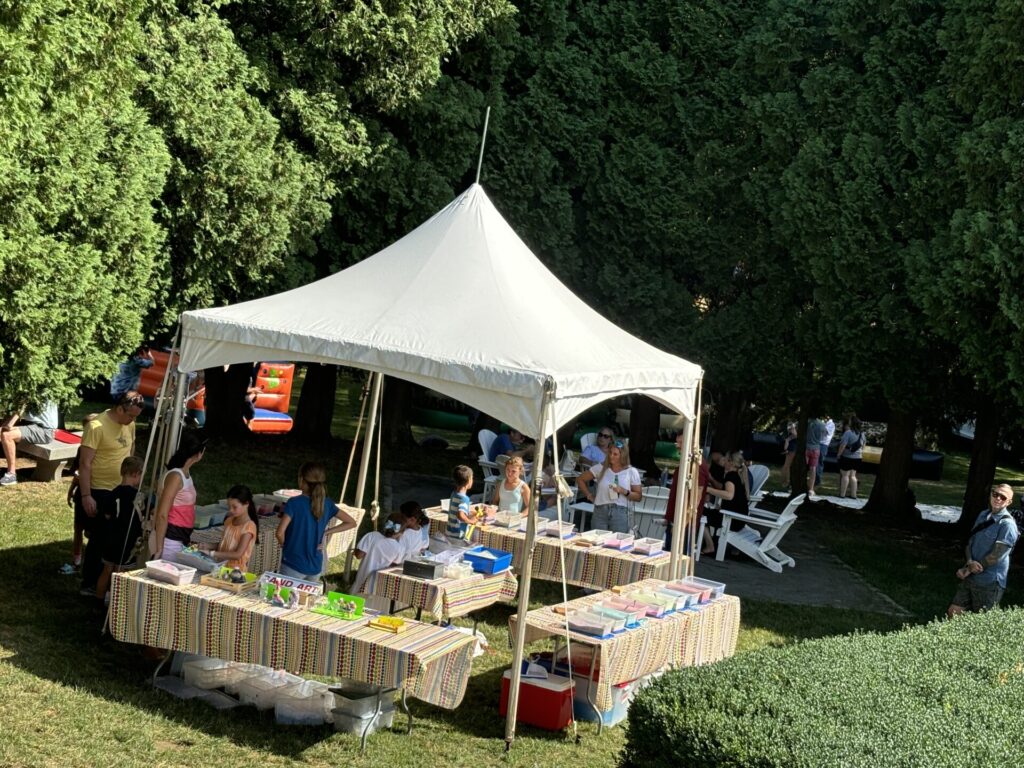
Across the United States, church parking lots, community halls, and even streets are transformed into a Greek village square. A marketplace of sorts with authentic Greek cuisine and vendors. Performances of traditional folk dances provide a colorful display of art, heritage, and ability. Vendors are selected thoughtfully in order to provide authentic Greek artistry. Children’s play areas and age-appropriate activities are an added draw for both parents and children.
For me and for many immigrants, these festivals are a connection to the culture we left behind and our desire to pass it on to future generations. I didn’t always see it that way. As a preteen in the 60s, the festivals were a way for me and my friends to feel freedom from the strict eye of our parents. Our parents felt it was safe for us to walk around on our own. The assumption, of course, was that since everyone was Greek, we would be safe. I believe back then only a few non-Greeks attended. Back then we knew them as “picnics,” a mere shadow of what the festivals are now. Yes, there was music and food. My recollection of the food is the food we brought. As a teenager, I remember the picnics being more organized. There was a designated dance floor and small tents protecting the food stations. We started inviting non-Greek friends to join us. My peers and I used this opportunity to spend time with boys, something we were not allowed to do at our age.
I remember the determination of attending certain picnics: The Cathedral of Boston, Saints Constantine and Helen of Cambridge, and a smaller version by the emigrants of Naoussa. In those years, the menu comprised pites (pies) made with homemade phyllo. I can taste and hear a crispy feta-filled square with the perfect crust. Another of my favorites was also a staple at these events-fried keftedes, Greek-style meatballs where garlic was not to be spared. The aroma of lamb was also prevalent.
When I attend a festival now, and I try to go to as many as my schedule allows, I am impressed with the evolution of the picnic. Seeing whole lambs roasting, the aroma of which pierces the nose and beckons you to get in line and place an order. The good thing is that the festivals are for two or three days. This gives one the opportunity to revisit and taste the souvlaki, the gyro, the dolmades (stuffed grape leaves), pastitsio, or any of the other offerings. I cannot overlook the dessert choices: syrup-drenched baklava, loukoumades covered with honey and walnuts, a variety of Greek and American pastries and cookies.
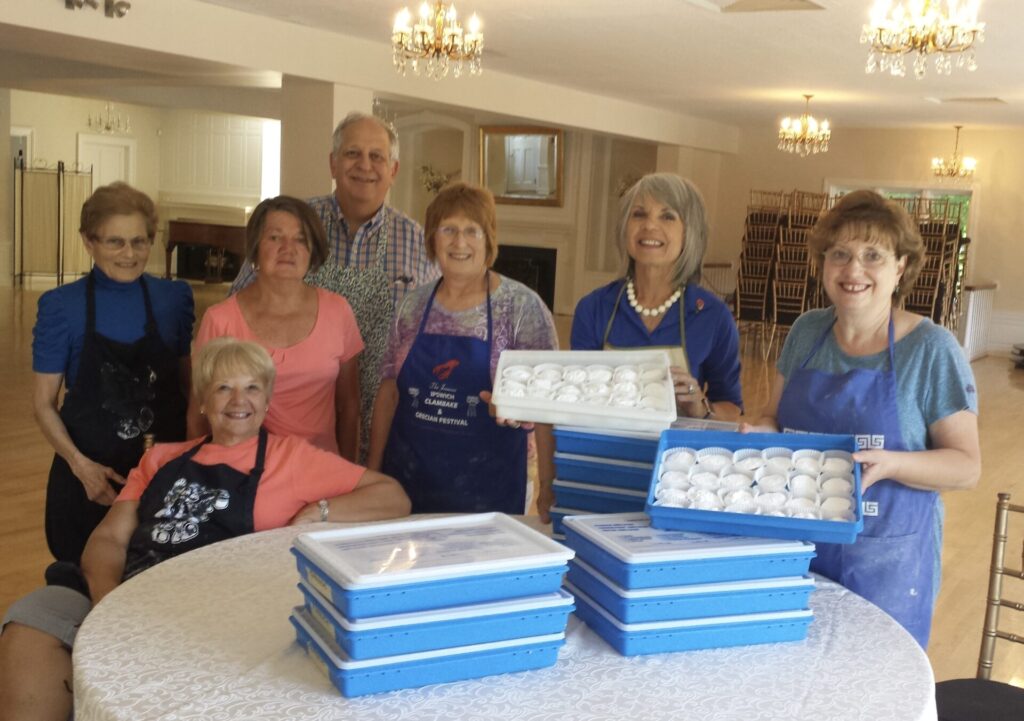
Once the church or organization committees decide on the menu, the work begins. Like any event that requires organization and preparation, smaller committees are formed and work on their assignments. On the food front, besides baking, I sign up to meet at our community center where we prepare dolmades, and tiropitakia (cheese-filled phyllo triangles). The freezers are filled and ready, usually about four weeks before our festival. The commitment to take part before, during, and after is one of pride. Everyone is on board to provide an excellent experience to all who attend. For the guests to feel the true Greek philoxenia (hospitality) and experience our culture.
Yes, the original desire of the immigrants has grown tremendously, but the goal remains the same-to keep the connection to our heritage and keep it alive for our children. Sharing all this beyond the Greek community, visitors who love to attend our festivals year after year are a source of our heritage pride.
Whether you are Greek, a philhellene, or curious about the culture, I invite you to attend a festival. You will feel welcome and will experience the joy that continues to bring people together across generations.
For additional information, click:
https://www.greekboston.com/events/category/festivals/
https://cookingwithgreekpeople.com/greek-festivals-in-america/